
Anthony Perez

Anthony Perez, a PhD in Applied Linguistics from the University of Toronto, has dedicated over 12 years to studying the cognitive aspects of language acquisition, with a special focus on English spelling conventions. His journey into the world of spelling and word comparisons was sparked by his research on how non-native speakers adapt to English orthography. At SpellRightDaily, Anthony shares his insights through content that explores the science behind spelling acquisition and offers strategies for overcoming common traps in English spelling. His articles are particularly aimed at learners who are new to English, although his engaging explanations also attract native speakers interested in refining their spelling skills. Anthony's research-driven approach provides an evidence-based perspective that enriches the site's resources, offering readers not just the 'how' but the 'why' behind effective spelling strategies. His work at SpellRightDaily combines academic rigor with practical application, making complex concepts accessible to a broad audience.

Adventure vs Survival Minecraft: Restricted Play vs Open…

Adventure vs Survival Minecraft: The Definitive Gameplay Difference

Quick answer: “Adventure mode” is a restricted gameplay setting where you cannot break or place blocks, designed for playing custom maps and stories. “Survival mode” is the standard experience where you must gather resources, craft tools, and manage health and hunger to stay alive. They are not interchangeable terms; one is for consumption, the other

Adventure vs Survival Minecraft: The Definitive Gameplay Difference Read More »

Spelling Guides
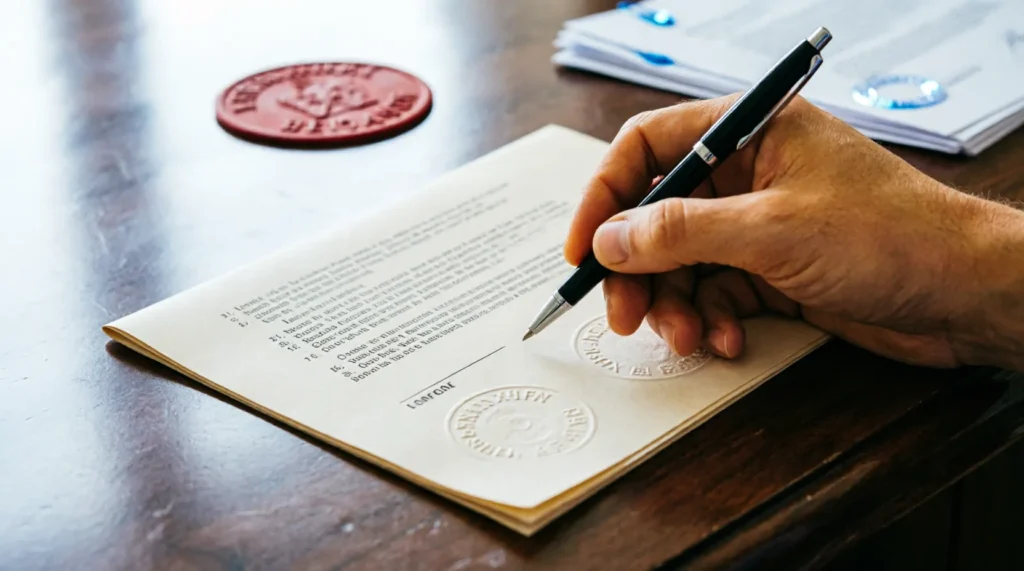

US Law Uses Acknowledgment; UK Law Uses Acknowledgement

Acknowledgement or Acknowledgment Legal: Which Spelling Is Correct?

Quick answer: In US legal documents, use acknowledgment (no “e”). In UK, Canadian, and Australian legal contexts, use acknowledgement (with the “e”). Both are correct, but jurisdiction dictates the standard. The confusion between these two spellings stems from a simple geographical divide in English language standards. As a copy editor who has reviewed thousands of

Acknowledgement or Acknowledgment Legal: Which Spelling Is Correct? Read More »

Spelling Guides
Stop Writing "Your Welcome": Use "You're" Because It Means…

Your vs You’re Welcome: The One Rule That Stops This Grammar Mistake Forever

Quick answer: The correct phrase is “You’re welcome” because it is a contraction of “You are welcome.” “Your welcome” is grammatically incorrect in this context because “your” is a possessive adjective, not a verb form. If you can replace the word with “you are,” use “you’re.” I have spent over fifteen years editing manuscripts, corporate

Your vs You’re Welcome: The One Rule That Stops This Grammar Mistake Forever Read More »

Spelling Guides
Whose vs Who's Meaning: The Apostrophe Test That Works

Whose vs Who’s Meaning: The Simple Rule That Ends Confusion Forever

Quick answer: “Whose” shows possession (belonging to someone), while “who’s” is a contraction meaning “who is” or “who has.” If you can replace it with “who is” or “who has,” use “who’s.” If it shows ownership, use “whose.” These two words sound identical when spoken aloud, which is exactly why I’ve corrected this mistake thousands

Whose vs Who’s Meaning: The Simple Rule That Ends Confusion Forever Read More »

Spelling Guides
Tuile vs Tuille: Why One L Is Correct for Cookies and Fabric

Tuille or Tuile in English: The Correct Spelling and Meaning

Quick answer: The correct spelling in English is tuile. “Tuille” is a common misspelling. A tuile is a thin, crisp cookie shaped like a roof tile, or in fashion, a lightweight net fabric used for veils and embellishments. If you have ever stared at a bakery menu or a sewing pattern and wondered whether that

Tuille or Tuile in English: The Correct Spelling and Meaning Read More »

Spelling Guides
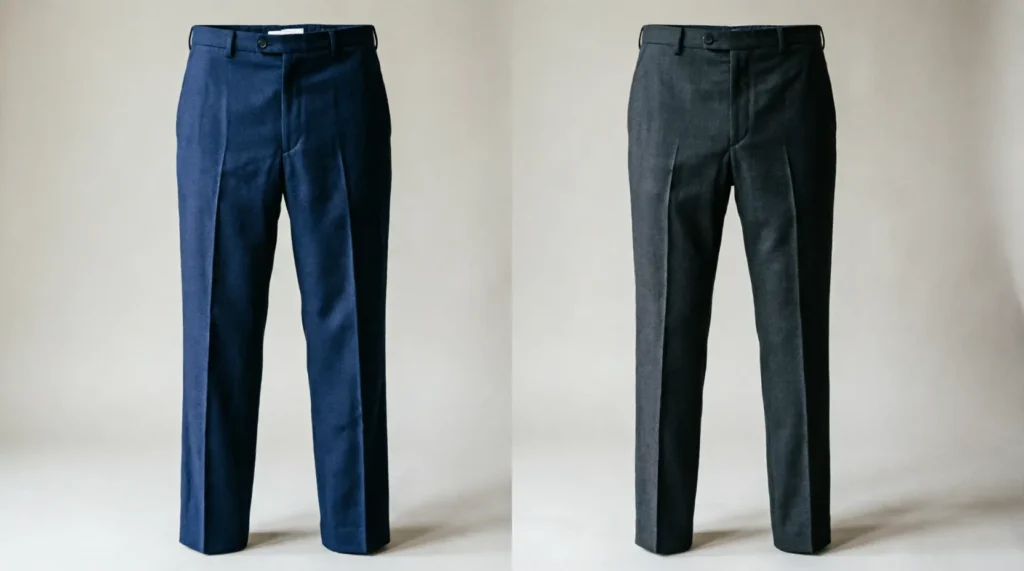
Tailored vs Slim Fit Trousers: The Real Difference

Tailored vs Slim Fit Trousers: What’s the Actual Difference?

Quick answer: Tailored trousers are custom-fitted to your exact measurements with a structured silhouette, while slim fit trousers are a ready-to-wear cut that sits close to the body but follows standard sizing. Choose tailored for a personalized fit; choose slim fit for a modern, close-cut look off the rack. If you’ve stood in a clothing

Tailored vs Slim Fit Trousers: What’s the Actual Difference? Read More »

Spelling Guides
Similes vs Metaphors for Kindness: Clear Examples

Similes and Metaphors for Kindness: A Writer’s Guide to Warmth

Quick answer: Similes compare kindness to something else using “like” or “as” (e.g., “kind as a summer breeze”), while metaphors state that kindness is something else (e.g., “kindness is a warm blanket”). Both are powerful tools, but they serve different rhythmic and emotional purposes in your writing. Writers often confuse similes and metaphors when trying

Similes and Metaphors for Kindness: A Writer’s Guide to Warmth Read More »

Spelling Guides
Revocable vs Irrevocable Trust: Control vs Protection

Revocable or Irrevocable Living Trust: Which One Do You Actually Need?

Quick answer: A revocable living trust allows you to change or cancel it anytime while you’re alive, keeping full control of your assets. An irrevocable living trust generally cannot be changed once created, but it offers stronger asset protection and potential tax benefits. For most people planning their estate, the revocable trust is the standard

Revocable or Irrevocable Living Trust: Which One Do You Actually Need? Read More »

Spelling Guides
Pique or Peak Your Interest? Why "Peak" Is Always Wrong

Pique or Peak Your Interest: The Correct Phrase Explained

Pique or Peak Your Interest? The Only Correct Phrase Explained Quick answer: The correct phrase is always pique your interest. “Peak” refers to the highest point of something, like a mountain summit, and cannot be used as a verb meaning to stimulate curiosity. If you write “peak your interest,” it is a spelling error that

Pique or Peak Your Interest: The Correct Phrase Explained Read More »

Spelling Guides
Onto vs Unto: Use Onto for Modern Writing, Unto Is Archaic

Onto or Unto the Next: The One-Word Rule That Fixes Your Writing

Quick answer: Use onto when you mean moving to a position on top of something or continuing to the next item. Use unto only in archaic, biblical, or poetic contexts meaning “to” or “until.” In modern writing, “onto” is almost always correct; “unto” is effectively obsolete outside of religious texts. Writers stumble over these two

Onto or Unto the Next: The One-Word Rule That Fixes Your Writing Read More »

Spelling Guides
Scroll to Top