

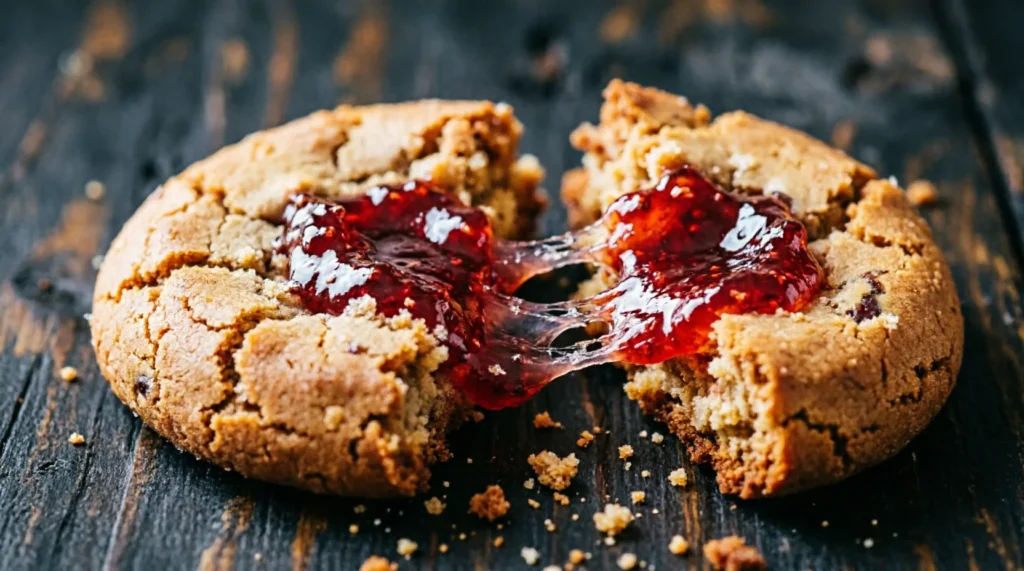
Quick answer: Use tearing when you’re pulling food apart with your hands or force, creating rough, uneven edges. Use cutting when you’re using a sharp tool like a knife or scissors to slice through food cleanly and precisely. For cookies with jam, you typically cut them for neat portions, but you might tear them for a rustic, casual presentation.
These two words confuse people because both describe separating something into pieces, but they require completely different methods and produce different results. When you’re handling delicate items like jam-filled cookies, choosing the wrong word can make your recipe instructions or food blog post sound unprofessional. Let’s clear up exactly when to use each term so you never second-guess yourself again.
| Term | Meaning / When to use | Example sentence |
|---|---|---|
| Tearing | Pulling apart with hands or force; creates rough, jagged, or uneven edges; no sharp tool involved | “She tore the warm cookie in half, letting the jam ooze out.” |
| Cutting | Slicing with a sharp tool like a knife, scissors, or blade; creates clean, smooth, precise edges | “He cut the cookie into quarters with a serrated knife to keep the jam intact.” |
When to use tearing
Tearing means separating something by pulling it apart with your hands, fingers, or sometimes by applying force without a sharp implement. The key characteristic of tearing is that it creates irregular, rough, or jagged edges rather than clean lines. According to Wikipedia’s article on tearing, this process involves fracturing or splitting material along irregular paths, which is exactly what happens when you pull food apart by hand.
Use “tearing” when:
- You’re using your hands or fingers to separate food
- You want rustic, homemade-looking portions
- The food is soft, warm, or fragile enough to pull apart
- Precision doesn’t matter, or you actually prefer uneven pieces
Here are real examples of “tearing” used correctly:
- “I tore the fresh-baked cookie apart while it was still warm, and the raspberry jam stretched between the two halves.”
- “Instead of using utensils, she just tore off a piece of the jam-filled pastry with her fingers.”
- “The recipe says to tear the cookies into bite-sized pieces before adding them to the trifle.”
I’ve edited countless food blogs and recipe cards where writers accidentally wrote “cut” when they clearly meant “tear.” For instance, someone might write, “Cut the bread apart with your hands,” which makes no sense—you can’t cut with your hands. The correct phrasing is “Tear the bread apart with your hands.” This error shows up constantly in amateur cooking content, and it immediately signals to readers that the writer doesn’t fully understand the difference between these two actions.
When to use cutting
Cutting means using a sharp tool—typically a knife, scissors, pizza cutter, or any blade—to slice through something in a controlled, deliberate manner. This creates clean, smooth edges and allows for precise portions. Wikipedia’s entry on cutting explains that cutting involves separating or opening an object by using a sharp directed force, which distinguishes it from tearing’s more chaotic separation.
Use “cutting” when:
- You’re using a knife, scissors, or any sharp implement
- You need neat, uniform portions
- You’re working with something that would crumble or make a mess if torn
- Presentation matters and you want clean edges
Here are real examples of “cutting” used correctly:
- “She cut the jam-filled cookie diagonally to show off the colorful filling inside.”
- “Use a sharp knife to cut the cookies into squares before the jam sets completely.”
- “He carefully cut around the edges of the pastry to keep the jam from spilling out.”
In my years as a copy editor for culinary publications, I see the opposite mistake just as often: writers say “tear” when they’re clearly describing knife work. For example, a resume might say, “Responsible for tearing vegetables for the salad bar,” when the person actually used a knife. That’s not tearing—that’s cutting, chopping, or slicing. Saying “tearing” in this context makes it sound like the person was ripping vegetables apart with bare hands, which is both inaccurate and unappetizing.
Another common error appears in text messages or casual writing: “I’m gonna tear up this pizza” when someone means they’re going to cut and eat it quickly. While this is slang and somewhat acceptable in very informal contexts, it still creates confusion. If you’re writing anything professional—a recipe, a food review, a catering proposal—stick to the precise meaning: cutting requires a blade, tearing requires pulling.
How to remember the difference
Here’s a simple memory trick that I teach every junior editor I mentor: Tearing starts with T, just like Tug and Twist. When you tear something, you’re tugging it apart or twisting it until it separates. Your hands pull in opposite directions, and the material gives way unevenly.
Cutting starts with C, just like Clean, Control, and Clade (think blade). When you cut, you maintain control over where the separation happens, and you get clean edges. A blade or sharp edge does the work, not your muscles pulling.
Another editor-level insight: Think about the sound and sensation. Tearing makes a ripping, uneven sound and feels rough—you’re fighting against the material’s resistance until it suddenly gives. Cutting makes a smoother sound (especially with a sharp knife) and feels more controlled—you’re guiding the tool through the material.
For food specifically, ask yourself: “Am I using a tool with an edge?” If yes, it’s cutting. “Am I using just my hands?” If yes, it’s tearing. This works every single time.
Common mistakes and exceptions
Mistake #1: Using “tear” for anything you separate by hand, even when precision is involved Some people say “tear off a piece” when they’re actually using a utensil to separate something neatly. If you’re using a pastry wheel, pizza cutter, or even the edge of a plate to create a straight line, that’s still cutting, not tearing. The tool defines the action, not the outcome.
Mistake #2: Confusing “tearing up” (emotional) with “tearing” (physical) In informal English, “tearing up” can mean becoming emotional and starting to cry. This has nothing to do with food or physical separation. Don’t write, “The beautiful cookie design made me tearing up,” when you mean it made you emotional. That’s a completely different usage.
Mistake #3: Regional variations in food preparation terminology In some cultures or regions, certain foods are traditionally torn rather than cut. For example, naan bread is often torn by hand in South Asian cuisine, while sandwich bread is typically cut with a knife in Western cuisine. The action hasn’t changed—only the cultural expectation. Don’t assume that because a food can be cut, it should be cut. Follow the traditional preparation method for authenticity.
Exception: Foods that can be both torn and cut Some foods, like soft cookies with jam filling, can legitimately be either torn or cut depending on your goal. If you want rustic presentation and don’t mind messy edges, tear them. If you want uniform portions for a party or photo, cut them. Both are correct; the context determines which word to use.
US vs. UK differences There’s no significant difference between American and British English regarding “tearing” vs. “cutting.” Both varieties use these words the same way. However, be aware that some foods have different names (biscuit vs. cookie), which might affect your sentence structure but not the fundamental verb choice.
Frequently Asked Questions
Can you tear a cookie with jam without making a mess? Yes, but it’s tricky. Warm cookies with soft jam filling tear more easily and create more mess than cooled cookies with set jam. If you must tear them, do it gently and over a plate to catch any filling that oozes out.
Is it wrong to say “cut with your hands”? Yes, it’s incorrect. You cannot cut with your hands because cutting requires a sharp tool. If you’re using only your hands, you’re tearing, ripping, or pulling apart—not cutting. This is a common error I fix regularly in recipe drafts.
What if I use a dull knife that crushes more than it cuts? It’s still cutting, even if the tool isn’t sharp enough to do it cleanly. The action is defined by your intent and the tool you’re using, not the quality of the result. However, you might describe it as “crushing” or “smashing” if the knife is so dull that it’s not really slicing at all.
Should recipes specify “tear” or “cut” for cookies with jam? Yes, good recipes are specific. If the author wants rustic, uneven pieces, they should say “tear.” If they want neat portions, they should say “cut.” Vague instructions like “break apart” leave too much room for interpretation and can lead to inconsistent results.

Kevin Sanchez holds a Master’s degree in English Linguistics from the University of California, where he cultivated a deep appreciation for the intricacies of language. With over 10 years of experience in the field, Kevin specializes in the nuances of English spelling, particularly the evolution of spelling conventions over time. His fascination with how English words have transformed through cultural and technological influences led him to become a prominent voice at SpellRightDaily. Kevin produces content focused on historical spelling variations and their contemporary implications, offering readers insightful comparisons of British and American English. Beyond this, Kevin has a keen interest in educating readers about the rules that govern standard spelling and the exceptions that often lead to confusion. His articles frequently feature tips for mastering complex spelling patterns and understanding the etymology of perplexing words. Kevin’s dedication to clarity and accessibility makes his contributions invaluable to both casual readers and English language professionals.