

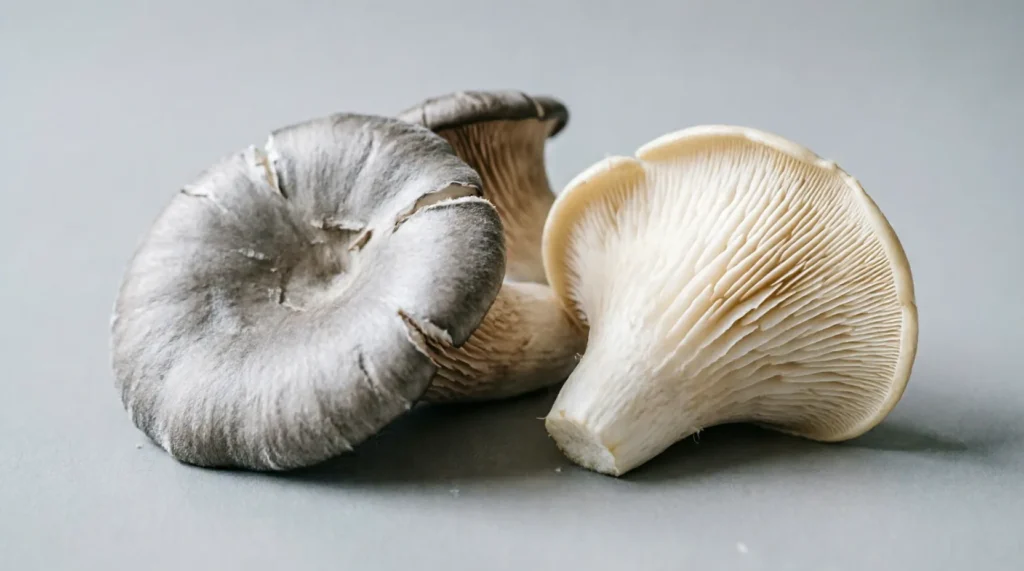
Quick answer: There is no botanical difference between grey and white oyster mushrooms; they are the same species (Pleurotus ostreatus). “Grey” refers to the standard wild-type color, while “white” is a cultivated albino variant. The choice depends entirely on your aesthetic preference and subtle textural nuances, as their flavors are nearly identical.
Many home cooks and even professional chefs find themselves staring at two clusters of oyster mushrooms in the grocery store, wondering if they are buying two different ingredients. One cluster is a soft, smoky charcoal; the other is a pristine, creamy ivory. The confusion is understandable because the packaging rarely explains the distinction, leading many to believe they are entirely different species with vastly different culinary profiles. In reality, the difference is largely cosmetic, stemming from selective breeding rather than biological divergence. Understanding this distinction helps you choose the right mushroom for your specific dish, whether you prioritize visual contrast or a slightly more delicate bite.
| Term | Meaning / When to use | Example sentence |
|---|---|---|
| Grey Oyster Mushroom | The standard, wild-type coloration of Pleurotus ostreatus; best for rustic dishes where a meaty, earthy aesthetic is desired. | “I sautéed the grey oyster mushrooms with thyme to mimic the texture of pulled pork.” |
| White Oyster Mushroom | An albino cultivar of Pleurotus ostreatus; best for delicate dishes, light-colored sauces, or when visual brightness is needed. | “The white oyster mushrooms added a elegant contrast to the dark truffle risotto without overpowering the plate.” |
When to use Grey Oyster Mushrooms
Grey oyster mushrooms are the original form of the species, closely resembling what you would find growing on decaying hardwoods in a temperate forest. Their pigmentation comes from natural melanin and other compounds that develop in response to light exposure during growth. This variety is generally considered the “standard” oyster mushroom in most culinary contexts outside of specialized gourmet markets.
You should choose grey oysters when you want a robust, earthy presence in your dish. While the flavor difference is subtle, many chefs argue that the grey variety has a slightly more pronounced umami depth and a firmer, meatier texture that holds up better to high-heat cooking methods. They are ideal for dishes where the mushroom is intended to be a primary protein substitute or a hearty side.
- Searing and Grilling: Because grey oysters often have a slightly thicker cap structure, they develop a superior crust when seared in a hot cast-iron skillet. I frequently use them in vegan “bacon” recipes, where the dark edges mimic the char of cured pork.
- Hearty Stews and Braises: In long-cooked dishes like beef bourguignon or vegetarian lentil stew, grey oysters maintain their structural integrity better than their white counterparts. They absorb the rich broth while retaining a satisfying chew.
- Rustic Presentations: If you are making a rustic galette, a wood-fired pizza, or a autumnal harvest bowl, the smoky grey tones blend beautifully with other earth-toned ingredients like kale, sweet potatoes, and whole grains.
In my experience editing food manuscripts, I often see writers describe grey oysters as having a “woodsy” aroma. This is accurate. The pigment compounds are linked to the same volatile organic compounds that give forest floors their distinctive scent. If you want your dish to evoke the feeling of a walk in the woods, grey is the correct choice.
When to use White Oyster Mushrooms
White oyster mushrooms are an albino cultivar. They lack the pigments found in the grey variety, resulting in a stark, clean appearance. This lack of pigment does not mean a lack of flavor, but it does change the visual dynamics of a dish significantly. White oysters are often bred for commercial consistency and aesthetic appeal in high-end restaurants where visual precision is paramount.
Choose white oysters when you need a delicate touch or a bright visual contrast. They are particularly effective in dishes where you want the mushroom to blend in seamlessly or provide a clean, neutral backdrop for vibrant sauces and herbs. Their texture is often described as slightly more tender and less fibrous than the grey variety, making them ideal for quick-cooking applications. For more, see Mushroom.
- Cream Sauces and Risottos: When making a creamy Alfredo, a béchamel, or a light lemon-butter sauce, white oysters disappear into the dish visually, allowing the sauce to remain uniform in color. This creates a more refined, elegant presentation compared to the speckled look grey oysters might create.
- Stir-Fries and Asian Cuisine: In delicate stir-fries with light soy glazes or ginger-scallion oils, white oysters provide a crisp-tender bite without dominating the visual palette. They pair exceptionally well with bok choy, snow peas, and tofu.
- Raw Preparations and Salads: While all oyster mushrooms should be cooked to break down their tough chitin cell walls [1], white oysters can be lightly blanched or quickly sautéed for salads where a softer texture is desired. Their pale color makes them look fresh and clean against dark greens like arugula or spinach.
I once reviewed a cookbook manuscript where the chef insisted on using white oysters for a spring pea soup garnish. The reasoning was purely visual: the white mushrooms mirrored the pale green of the peas, creating a monochromatic, sophisticated look that grey mushrooms would have disrupted. This is a perfect example of choosing based on aesthetics rather than flavor.
How to remember the difference
The easiest way to remember the difference is to think of pigment as protection. Grey oysters are the “wild” version, exposed to the elements, developing a tan or grey coat much like human skin develops melanin in the sun. White oysters are the “sheltered” version, bred to lack this protective pigment, resulting in a paler, more delicate appearance.
Here is a simple mnemonic: Grey is for Grit, White is for Whimsy.
- Grey = Grit: Think of gritty, earthy, robust, hearty dishes. Use grey when you want the mushroom to stand up to strong flavors and high heat.
- White = Whimsy: Think of light, airy, elegant, delicate dishes. Use white when you want the mushroom to blend in or add a touch of refined simplicity.
Another editor-level insight: Look at the gills. In grey oysters, the gills are often a lighter shade of grey or off-white, creating a subtle gradient. In white oysters, the gills are pure white, matching the cap exactly. If you are ever unsure in the kitchen, check the gills. If they are stark white, you have the albino cultivar. If they have any hint of grey or beige, you have the standard variety.
Common mistakes and exceptions
One of the most common mistakes I see in food writing and home cooking is assuming that white oyster mushrooms are a different species entirely, such as Pleurotus pulmonarius (the phoenix oyster) or Hericium erinaceus (lion’s mane). While these are also edible fungi, they are botanically distinct. White oyster mushrooms are simply Pleurotus ostreatus without pigment. Confusing them with other species can lead to incorrect cooking times and flavor expectations.
Another frequent error is overcooking white oysters under the assumption that they are more delicate. While they are visually lighter, they have the same cellular structure as grey oysters. They still require sufficient heat to break down chitin, a polysaccharide that makes raw mushrooms difficult to digest [1]. Undercooking either variety can lead to gastric discomfort. Always ensure your oyster mushrooms are cooked until they are tender and have released their moisture.
There is also a regional naming confusion. In some European markets, grey oysters are simply called “oyster mushrooms,” while white ones are labeled “albino oysters” or “pearl oysters.” In the US, the term “white oyster” is more common. Be aware that “blue oyster mushrooms” are another variant of Pleurotus ostreatus that start blue and fade to grey as they mature. They are not a separate species from the grey oyster, just a younger stage of the same pigment development process. For more, see Oyster.
Finally, do not confuse white oyster mushrooms with king oyster mushrooms (Pleurotus eryngii). King oysters are much larger, have thick stems, and small caps. They are a different species entirely and require different preparation methods, often being sliced into medallions to mimic scallops. White oyster mushrooms retain the classic fan-shaped cap and clustered growth pattern of the standard oyster mushroom.
Frequently Asked Questions
Do grey and white oyster mushrooms taste different? The flavor difference is negligible for most palates. Grey oysters may have a slightly earthier, more robust note due to pigment-related compounds, while white oysters are marginally milder, but both share the signature mild, seafood-like oyster flavor.
Can I substitute grey oyster mushrooms for white ones in a recipe? Yes, you can substitute them one-to-one in any recipe. The only change will be visual; grey mushrooms will add darker specks to your dish, which may alter the aesthetic but will not ruin the flavor profile.
Why are white oyster mushrooms often more expensive? White oyster mushrooms are often priced higher because they are a specialized cultivar that requires controlled growing conditions to maintain their lack of pigment. They are also less common in standard grocery stores, leading to lower economies of scale compared to the ubiquitous grey variety.
Are white oyster mushrooms easier to clean than grey ones? No, both varieties grow in similar clustered formations and trap substrate debris in their gills. Both require the same careful cleaning method: wiping with a damp cloth or brushing gently, rather than soaking, to prevent waterlogging.

Kevin Sanchez holds a Master’s degree in English Linguistics from the University of California, where he cultivated a deep appreciation for the intricacies of language. With over 10 years of experience in the field, Kevin specializes in the nuances of English spelling, particularly the evolution of spelling conventions over time. His fascination with how English words have transformed through cultural and technological influences led him to become a prominent voice at SpellRightDaily. Kevin produces content focused on historical spelling variations and their contemporary implications, offering readers insightful comparisons of British and American English. Beyond this, Kevin has a keen interest in educating readers about the rules that govern standard spelling and the exceptions that often lead to confusion. His articles frequently feature tips for mastering complex spelling patterns and understanding the etymology of perplexing words. Kevin’s dedication to clarity and accessibility makes his contributions invaluable to both casual readers and English language professionals.