

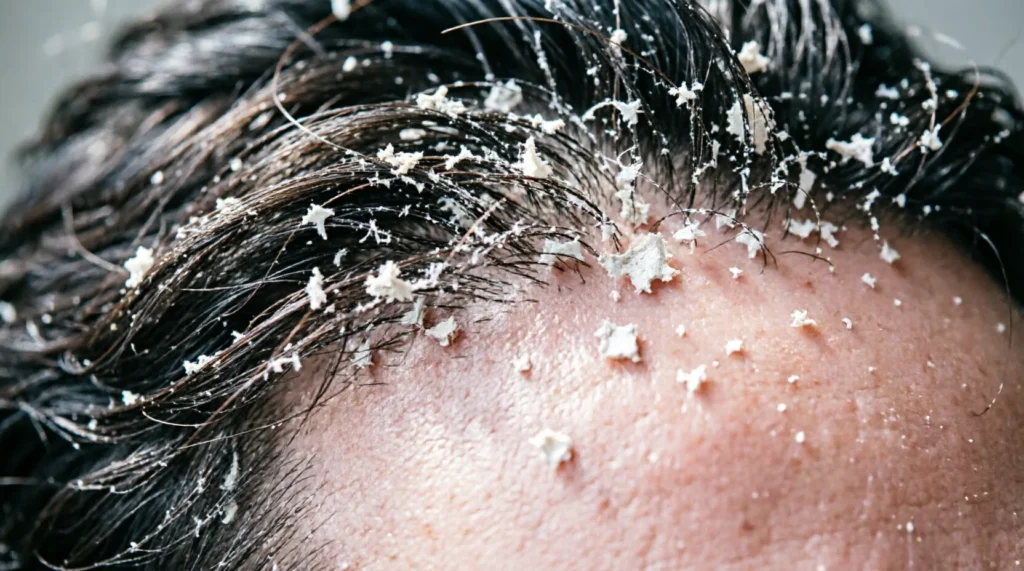
Quick answer: Dandruff is caused by a fungal overgrowth (Malassezia) leading to oily, yellowish flakes, while dry skin results from lack of moisture, producing small, white, non-oily flakes. Treating dandruff requires antifungal agents, whereas dry skin needs hydration and gentle moisturizers.
Many people stand in the pharmacy aisle, staring at two different aisles, completely unsure which product to buy. One bottle promises to fight fungus, while the other offers deep hydration. Using the wrong treatment can not only fail to solve the problem but often makes it worse. If you treat a fungal issue with heavy oils, you feed the yeast. If you treat dry skin with harsh antifungals, you strip away essential moisture. Understanding the biological difference between these two conditions is the first step toward a healthy, flake-free scalp.
| Term | Meaning / When to use | Example sentence |
|---|---|---|
| Dandruff | A common chronic scalp condition caused by an overgrowth of yeast, resulting in oily, larger, yellow-tinged flakes. | “I switched to a zinc pyrithione shampoo because my dandruff was causing visible white spots on my black blazer.” |
| Dry Skin | A condition caused by a lack of natural oils and moisture in the scalp, resulting in small, white, dry flakes. | “The cold winter air gave me dry skin on my scalp, so I started using a hydrating hair mask twice a week.” |
When to use Dandruff treatments
Dandruff, medically known as seborrheic dermatitis when severe, is not simply a hygiene issue. It is a reaction to a microorganism that lives on everyone’s scalp. According to Dandruff, this condition is linked to an overgrowth of a yeast-like fungus called Malassezia. This fungus feeds on the oils secreted by your hair follicles. As it breaks down these oils, it produces oleic acid. For many people, this acid irritates the scalp, triggering an inflammatory response. The body reacts by speeding up the turnover of skin cells. These cells clump together with oil and shed in visible, often sticky, flakes.
You should suspect dandruff if your flakes are larger, yellowish, or oily to the touch. You might also notice redness or itching that feels intense rather than just tight. Dandruff tends to persist regardless of the season, though stress and hormonal changes can trigger flare-ups. It is crucial to address this with active ingredients designed to reduce the fungal population or slow down cell production.
Here are three real-world scenarios where dandruff is the likely culprit:
- The Office Presentation: You are wearing a dark navy suit for a major client meeting. Halfway through your presentation, you notice small, yellowish-white specks accumulating on your shoulders. They look slightly greasy rather than powdery. This is classic dandruff, driven by excess sebum production and fungal activity.
- The Post-Gym Itch: After a heavy workout, your scalp feels intensely itchy and irritated, not just dry. When you scratch, you lift off larger, clumpy flakes that seem to stick to your fingernails. This indicates an inflammatory response typical of seborrheic dermatitis.
- The Persistent Flake: You have tried switching to a moisturizing shampoo, but the flakes remain. In fact, they seem worse after using heavy conditioners. This suggests that the underlying issue is microbial, not merely a lack of hydration, requiring an antifungal approach.
Effective treatments for dandruff include shampoos containing zinc pyrithione, selenium sulfide, ketoconazole, or salicylic acid. These ingredients work by either killing the fungus or helping the scalp shed dead skin cells more effectively before they clump together. It is important to leave these shampoos on the scalp for at least five minutes to allow the active ingredients to penetrate and work.
When to use Dry Skin treatments
Dry skin on the scalp is fundamentally different from dandruff. It is a moisture barrier issue. Just like the skin on your face or hands, your scalp can become dehydrated due to environmental factors, harsh products, or aging. When the scalp lacks sufficient natural oils (sebum) or water content, the skin cells shrink and detach individually. These flakes are typically smaller, whiter, and fall off easily like snow. They do not stick to the hair shaft or the scalp in the same way oily dandruff flakes do.
According to Skin, the epidermis acts as a protective barrier. When this barrier is compromised by external aggressors like cold weather, low humidity, or hot water, it loses its ability to retain moisture. The result is tightness, mild itching, and fine, powdery flakes. Unlike dandruff, dry scalp is not caused by a fungus. Therefore, antifungal shampoos will likely exacerbate the problem by stripping away the little natural oil remaining.
You should suspect dry skin if your flakes are tiny, white, and dust-like. Your scalp may feel tight, especially after washing. You might also experience dryness on other parts of your body, such as your arms or legs, indicating a systemic issue with hydration or environmental exposure.
Consider these specific examples where dry skin is the primary issue:
- The Winter Commute: You live in a climate with harsh winters. After walking outside in freezing temperatures and then entering a heated office, your scalp feels tight and itchy. When you brush your hair, you see a fine, white dust settle on your collar. This is environmental dryness, not fungal overgrowth.
- The Over-Washer: You wash your hair every day with a clarifying shampoo to remove product buildup. Recently, your scalp has started to feel sensitive and itchy. The flakes you see are small and dry. This is a case of product-induced dryness, where the natural lipid barrier has been stripped away by excessive cleansing.
- The New Mom: Post-partum hormonal shifts can sometimes lead to temporary dryness. A new mother notices her scalp feels parched and sensitive. The flakes are small and non-oily. She finds relief not with medicated shampoos, but with a gentle, sulfate-free cleanser and a lightweight scalp oil.
Treating dry scalp requires a gentle approach. Switch to a sulfate-free, moisturizing shampoo. Incorporate a hydrating scalp serum or light oil, such as jojoba or argan oil, into your routine. Avoid hot water when washing your hair, as it strips natural oils. Instead, use lukewarm water and follow up with a conditioner that focuses on hydration rather than volume or clarification.
How to remember the difference
The confusion between these two conditions is common because the visual symptom—flakes—is similar. However, the underlying mechanism is opposite. One is an excess problem (too much oil and fungus), and the other is a deficit problem (too little moisture).
Here is a simple mnemonic to keep them straight:
Dandruff is Damp. Dry Skin is Dust.
If the flakes are damp, oily, or sticky, think “Damp” for Dandruff. This signals the presence of excess sebum and fungal activity. If the flakes are dry, powdery, and fall like dust, think “Dry” for Dry Skin. This signals a lack of moisture.
Another editor-level insight is to look at the rest of your body. Dandruff is often localized to areas rich in sebaceous glands, such as the scalp, eyebrows, and sides of the nose. If you have flaky patches in these oily zones, it is likely seborrheic dermatitis. Dry skin, however, often presents alongside dry elbows, knees, or hands. If your hands are cracked and dry in the winter, your scalp is likely suffering from the same environmental dehydration.
I have seen countless clients purchase expensive antifungal treatments for what was simply a case of winter dryness. They ended up with a irritated, red scalp because the harsh chemicals further damaged their moisture barrier. Always assess the texture of the flake first. Is it a clump or a grain? Clumps suggest dandruff; grains suggest dryness.
Common mistakes and exceptions
One of the most frequent mistakes is assuming that all itching means dandruff. While both conditions cause itching, the nature of the itch differs. Dandruff itch is often inflammatory and persistent. Dry skin itch is usually a sensation of tightness that resolves briefly after applying moisture.
Another common error is over-treating. People with dry scalp often see flakes and immediately buy a strong dandruff shampoo. This creates a vicious cycle. The antifungal agents strip the scalp, making it drier, which leads to more flaking, which leads to more aggressive treatment. Breaking this cycle requires recognizing that the initial diagnosis was wrong.
There are also exceptions where the lines blur. Seborrheic dermatitis can coexist with dry skin. For example, someone may have a naturally dry scalp due to age but also have a mild fungal overgrowth. In these complex cases, a dermatologist might recommend a rotating schedule: using an antifungal shampoo once a week to keep the yeast in check, and using gentle, hydrating products for the other washes.
Regional spelling differences do not apply to these medical terms, but product labeling can be confusing. In the US, you will see “dandruff shampoo” prominently displayed. In some other markets, terms like “anti-flake” or “scalp balance” are used. Always read the active ingredients. If it contains zinc pyrithione or ketoconazole, it is targeting dandruff. If it highlights hyaluronic acid, glycerin, or natural oils, it is targeting dryness.
It is also worth noting that psoriasis can mimic both conditions. Psoriasis flakes are typically thicker, silvery, and accompanied by raised, red patches. If over-the-counter treatments for both dandruff and dry skin fail to provide relief after four weeks, it is essential to consult a healthcare provider to rule out psoriasis or other dermatological conditions.
Frequently Asked Questions
Can I use coconut oil for both dandruff and dry skin? Coconut oil is excellent for dry skin as it provides moisture, but it can worsen dandruff because the fungus that causes dandruff feeds on the fatty acids in oils. Use it only if you are certain your condition is dryness.
Does drinking more water cure dry scalp? While hydration is important for overall skin health, drinking water alone rarely cures established dry scalp. Topical treatments and gentle hair care practices are more effective for immediate relief, though internal hydration supports long-term skin barrier function.
Why do I still have flakes after using dandruff shampoo? You may have dry skin instead of dandruff, or you might not be leaving the shampoo on long enough. Alternatively, you could have a resistant strain of fungus or a different condition like psoriasis, which requires a different treatment protocol.
Is dandruff contagious? No, dandruff is not contagious. The yeast Malassezia is present on everyone’s scalp. Dandruff develops due to individual sensitivity to the byproducts of this yeast, not through transmission from another person.

Kevin Sanchez holds a Master’s degree in English Linguistics from the University of California, where he cultivated a deep appreciation for the intricacies of language. With over 10 years of experience in the field, Kevin specializes in the nuances of English spelling, particularly the evolution of spelling conventions over time. His fascination with how English words have transformed through cultural and technological influences led him to become a prominent voice at SpellRightDaily. Kevin produces content focused on historical spelling variations and their contemporary implications, offering readers insightful comparisons of British and American English. Beyond this, Kevin has a keen interest in educating readers about the rules that govern standard spelling and the exceptions that often lead to confusion. His articles frequently feature tips for mastering complex spelling patterns and understanding the etymology of perplexing words. Kevin’s dedication to clarity and accessibility makes his contributions invaluable to both casual readers and English language professionals.