

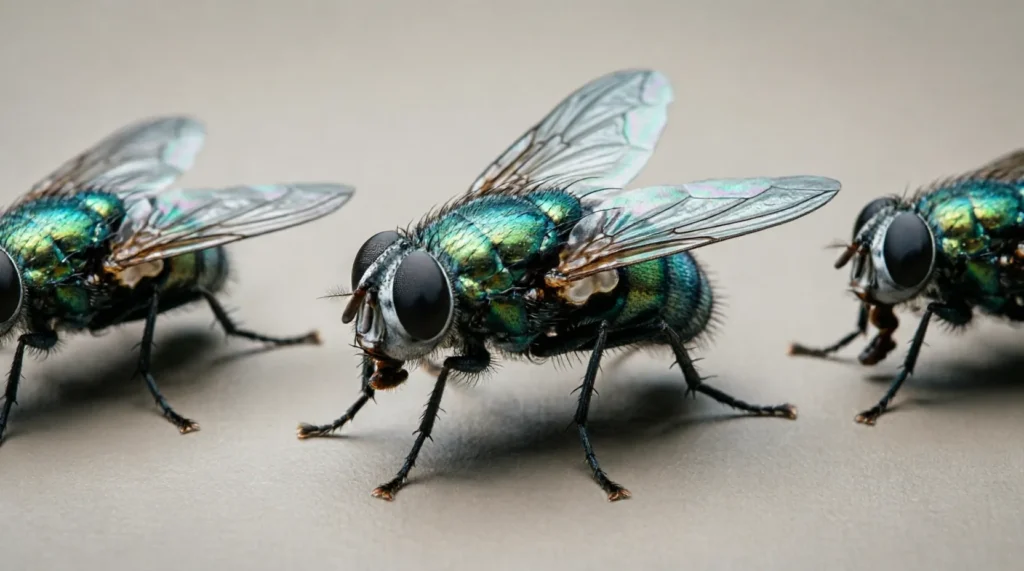
Quick answer: The correct spelling is flies. “Flys” is almost always a misspelling when referring to the insect or the verb form of “to fly.” The only common exception is the proper noun Flys, such as the name of a band.
If you have ever paused mid-sentence, hovering over your keyboard, wondering if that buzzing insect is a fly or a flys, you are not alone. This confusion stems from a common misunderstanding of English pluralization rules, specifically how words ending in “y” change when they become plural or conjugated. While English is full of irregularities, this particular rule is remarkably consistent. Knowing the difference ensures your writing looks professional, whether you are drafting a pest control email, describing a summer picnic, or writing about aviation.
| Term | Meaning / When to use | Example sentence |
|---|---|---|
| Flies | The plural noun for the insect; the third-person singular present verb for “to fly.” | The house flies around the kitchen every morning. |
| Flys | A rare proper noun (e.g., a band name); generally incorrect in standard English. | I listened to the album by the band Flys. |
When to use flies
You should use flies in two primary grammatical contexts: as the plural form of the noun fly (the insect) and as the third-person singular present tense of the verb to fly.
The Plural Noun: Insects
When you are referring to more than one insect from the order Diptera, the correct plural is flies. This follows the standard English rule for nouns ending in a consonant plus “y.” You drop the “y” and add “ies.”
Consider these real-world examples where precision matters:
- In a customer service email: “We apologize for the inconvenience, but our warehouse team noticed several flies near the loading dock and has scheduled an exterminator.”
- In a biology report: “The study focused on how fruit flies reproduce at accelerated rates in warm temperatures.”
- In a casual text message: “Can you please close the window? There are so many flies getting in here!”
According to Wikipedia, flies are a diverse group of insects with over 120,000 described species, making the plural form “flies” one of the most commonly used terms in entomology and general conversation. Whether you are talking about houseflies, horseflies, or fruit flies, the spelling remains consistent.
The Verb: To Fly
When using the verb to fly in the third-person singular present tense (he, she, it), you also use flies. This applies to birds, planes, superheroes, or anyone moving through the air.
- In a travel blog: “She flies business class whenever her company budget allows it.”
- In a sports commentary: “The quarterback flies down the sideline, dodging defenders with incredible agility.”
- In a children’s story: “The little bird flies back to its nest before the storm arrives.”
In both cases, the root word is fly, and the transformation to flies is mandatory in standard English. Using “flys” here would be immediately flagged as an error by any competent editor or spell-checker.
When to use flys
You should essentially never use flys in standard writing. It is not a recognized plural noun, nor is it a correct verb conjugation. However, there is one very specific exception: proper nouns.
The Proper Noun Exception
The word Flys exists primarily as a name. For instance, there was a British rock band named Flys that gained some popularity in the late 2000s. If you are writing about this specific band, you must capitalize the word and use the spelling Flys.
- Correct: “I saw Flys perform at the festival in 2009.”
- Incorrect: “I saw flys perform at the festival.” (This implies you saw insects performing, which is unlikely.)
Outside of this narrow context, flys has no place in formal or informal standard English. If you see it in a document, it is almost certainly a typo.
Why People Get It Wrong
The confusion often arises because English has many nouns ending in “y” that simply add an “s” to become plural. For example:
- Boy → Boys
- Toy → Toys
- Key → Keys
However, these words end in a vowel plus “y.” The rule changes when a consonant precedes the “y.”
- City → Cities (not Citys)
- Baby → Babies (not Babys)
- Fly → Flies (not Flys)
I see this error constantly in draft manuscripts and student essays. Writers often generalize the “add s” rule without checking the preceding letter. It is a simple oversight, but one that undermines the credibility of the writer. In a professional cover letter, writing “I have handled many difficult flys in my previous role” (instead of “issues” or perhaps metaphorically “flies,” though that would be odd) would look careless. Even in less formal contexts, such as social media posts, using the correct spelling signals attention to detail.
How to remember the difference
Here is a simple mnemonic to help you lock this rule into your memory:
“Consonant + Y? Change it to I-E-S.”
If the letter before the “y” is a consonant (like the “l” in fly), you must change the “y” to “i” and add “es.”
- F-l-y → F-l-ies
If the letter before the “y” is a vowel (a, e, i, o, u), you just add “s.”
- P-l-a-y → P-l-a-y-s
Another helpful trick is to think of the word “lie.” When you tell a falsehood, the plural is lies, not “lys.” The word fly behaves exactly the same way. If you can remember that lie becomes lies, you can remember that fly becomes flies.
For the verb form, think of the phrase: “He tries, she flies.” Both words follow the same pattern. You would never write “he trys,” so you should never write “she flys.”
Common mistakes and exceptions
While the rule is straightforward, there are a few edge cases and common pitfalls that trip up even experienced writers.
The “Fly” as a Clothing Item
One source of confusion is the word fly in the context of clothing (e.g., “zipper fly” or “button fly”). The plural of this noun is still flies.
- Correct: “The tailor adjusted the flies on all three pairs of trousers.”
- Incorrect: “The tailor adjusted the flys on all three pairs of trousers.”
This usage is rare in everyday conversation, but it appears in fashion design and tailoring contexts. The grammatical rule does not change because the meaning has shifted; it is still a noun ending in a consonant + y.
US vs. UK English
There is no difference between US and UK English regarding this word. Both varieties spell the plural of fly as flies and the verb form as flies. Unlike words such as color/colour or center/centre, this term is standardized across all major English dialects. You do not need to adjust your spelling based on your audience’s location.
Typographical Errors in Digital Communication
In fast-paced digital communication, such as texting or Slack messages, autocorrect can sometimes cause issues. However, most modern spell-checkers will flag flys as an error unless it is capitalized as a proper noun. If you are typing quickly, you might accidentally hit “s” instead of navigating the cursor to change “y” to “ies.”
I once edited a marketing brochure for a local airline that had the headline: “She flys free on weekends.” It was a costly mistake because the brochures had already been printed. The client was embarrassed, and we had to issue a digital correction immediately. This real-world example highlights why taking two extra seconds to verify the spelling of flies is worth the effort.
Compound Words
Compound words involving fly also follow the pluralization rule of the main noun.
- Butterfly → Butterflies (not Butterflys)
- Dragonfly → Dragonflies (not Dragonflys)
- Housefly → Houseflies (not Houseflys)
Even though these are compound words, the final element is fly, so the same consonant + y rule applies. If you are unsure, break the word down. Does it end in a consonant + y? If yes, use -ies.
Frequently Asked Questions
Is “flys” ever correct in standard English? No, “flys” is not correct in standard English grammar for nouns or verbs. It is only accepted as a proper noun, such as the name of the British band Flys.
Why do some people write “flys” instead of “flies”? People often write “flys” because they mistakenly apply the rule for words ending in a vowel + y (like “boy” becoming “boys”) to words ending in a consonant + y. It is a common overgeneralization error.
Does the spelling change if I am talking about fishing flies? No, the plural of a fishing fly (the artificial lure) is still flies. For example, “He packed a box of colorful flies for his trout fishing trip.”
How do I pluralize words like “monkey” or “day”? Words ending in a vowel + y, such as monkey and day, simply add an “s” to become monkeys and days. This is different from fly, which ends in a consonant + y and becomes flies.

Kevin Sanchez holds a Master’s degree in English Linguistics from the University of California, where he cultivated a deep appreciation for the intricacies of language. With over 10 years of experience in the field, Kevin specializes in the nuances of English spelling, particularly the evolution of spelling conventions over time. His fascination with how English words have transformed through cultural and technological influences led him to become a prominent voice at SpellRightDaily. Kevin produces content focused on historical spelling variations and their contemporary implications, offering readers insightful comparisons of British and American English. Beyond this, Kevin has a keen interest in educating readers about the rules that govern standard spelling and the exceptions that often lead to confusion. His articles frequently feature tips for mastering complex spelling patterns and understanding the etymology of perplexing words. Kevin’s dedication to clarity and accessibility makes his contributions invaluable to both casual readers and English language professionals.