

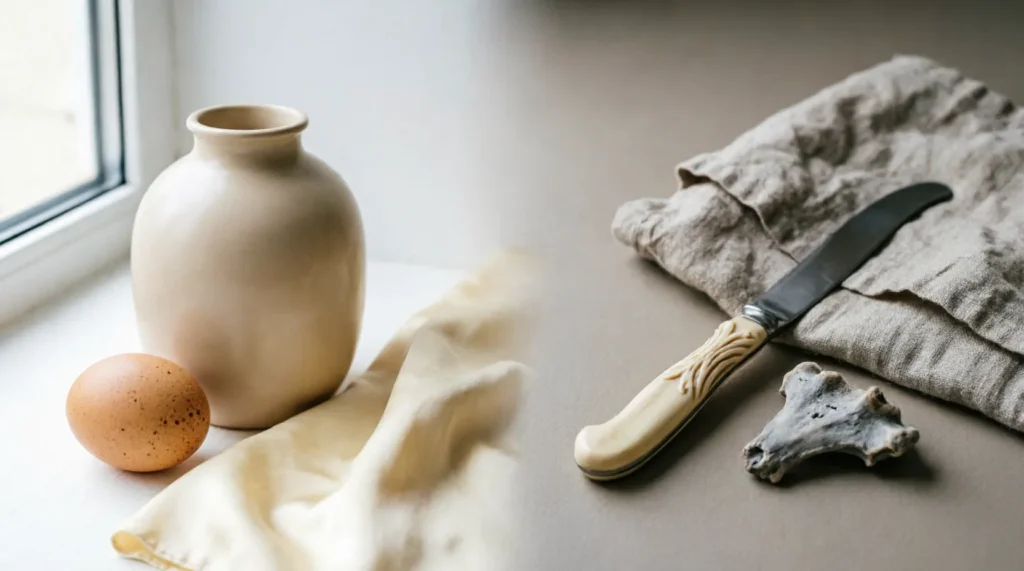
Quick answer: Eggshell and bone are both warm off-white paint colors, but bone is slightly warmer and creamier while eggshell has a subtle gray-beige undertone. Choose bone for cozy, traditional spaces and eggshell for modern, clean-looking rooms with better durability.
If you’ve ever stood in a paint store staring at dozens of white swatches, you know that eggshell and bone color look nearly identical at first glance. Both are popular neutral paints that designers reach for when pure white feels too stark, but they create distinctly different moods in a room. Understanding the subtle differences between these two shades can transform your space from “nice” to “perfectly curated.”
| Term | Meaning / When to use | Example sentence |
|---|---|---|
| Eggshell | A warm off-white with subtle gray-beige undertones; best for high-traffic areas needing durability and a soft, modern neutral | “We painted the hallway in eggshell because it hides scuffs better than flat white.” |
| Bone | A warmer, creamier off-white with yellow-tan undertones; ideal for creating cozy, inviting spaces with traditional or rustic aesthetics | “The bedroom feels so peaceful with bone-colored walls that glow in the morning light.” |
When to use eggshell
Eggshell paint gets its name from the slight sheen that resembles an actual eggshell’s surface—not from its color. According to Wikipedia’s entry on eggshell, the natural eggshell has a specific texture and appearance that paint manufacturers have replicated in both finish and color naming. When designers specify “eggshell” as a color (not just a finish), they’re referring to a soft off-white with gray-beige undertones that reads as clean and contemporary.
Choose eggshell when you need:
- Durability in busy spaces: The eggshell finish (which typically accompanies this color) has a slight gloss that makes it easier to clean than flat paint, perfect for hallways, kids’ rooms, and living areas
- A modern, sophisticated neutral: The gray-beige undertone keeps spaces feeling fresh and current without the coldness of pure white
- Better light reflection: Eggshell bounces light around a room more effectively than flat finishes, making smaller spaces feel larger
Real-world example: I recently advised a client painting their rental property to use eggshell throughout instead of flat white. Six months later, they told me the walls still looked fresh despite tenants with two large dogs—the slight sheen made all the difference when wiping down paw prints and scuff marks.
Sample sentences showing proper use:
- “The kitchen cabinets in eggshell photograph beautifully for our listing because they don’t show every fingerprint.”
- “I chose eggshell for the nursery since it’s softer than pure white but won’t clash as the baby’s taste changes over the years.”
- “After three coats, the eggshell finally covered the dark navy underneath without looking patchy.”
When to use bone
Bone color is warmer and creamier than eggshell, with distinct yellow-tan undertones that create an instantly cozy atmosphere. This shade mimics the natural color of aged bone or ivory, bringing warmth and softness to any space. It’s particularly effective in rooms where you want to create a welcoming, traditional, or rustic feeling.
Choose bone when you need:
- Warmth in north-facing rooms: The yellow undertones counteract the cool, gray light that comes through north-facing windows
- A traditional or vintage aesthetic: Bone pairs beautifully with antique furniture, warm wood tones, and classic architectural details
- A softer alternative to cream: While cream can sometimes feel dated, bone strikes a balance between warmth and sophistication
Real-world example: A homeowner once asked me why their “white” living room felt so cold and unwelcoming despite having plenty of natural light. We repainted in bone color, and suddenly the entire space felt inviting—the warm undertones reflected sunlight differently, creating that golden-hour glow throughout the day.
Sample sentences showing proper use:
- “The bone-colored trim around the windows makes the antique oak floors look even richer.”
- “We went with bone for the exterior because it complements the stone foundation better than stark white.”
- “Her wedding dress wasn’t pure white—it was bone, which looked stunning against her skin tone.”
How to remember the difference
Here’s the memory trick I teach all my design clients: Bone = Butter, Eggshell = Earth.
Bone color has buttery, yellow-warm undertones that make you think of softened butter or aged ivory. Eggshell has earthy, gray-beige undertones that remind you of natural soil or stone.
Another way to lock this in: Think about the actual objects. A chicken eggshell (as described in Wikipedia’s eggshell article) has a slightly grayish, matte appearance with subtle variations. Bone, especially aged bone, has a warmer, yellower tone. The paint colors mimic these natural references.
When you’re holding two swatches side by side, the warmer one with yellow undertones is bone. The cooler one with gray undertones is eggshell. If you’re still unsure, place them against a pure white piece of paper—the bone will look distinctly creamy, while the eggshell will appear more muted and gray.
Common mistakes and exceptions
Mistake #1: Confusing finish with color This is the error I see most frequently in client consultations. “Eggshell” technically refers to a paint finish (the level of sheen), not just a color. You can have eggshell finish in any color, and you can have bone color in any finish (flat, satin, semi-gloss). When someone says “I want eggshell walls,” clarify whether they mean the finish or the specific off-white color. For more, see Color.
Mistake #2: Not testing in the actual space Both eggshell and bone are chameleon colors that shift dramatically based on lighting. I once had a client who fell in love with bone color in the store, only to discover it looked yellow and dated in their south-facing living room. Always paint large swatches (at least 2×2 feet) and observe them at different times of day before committing.
Mistake #3: Mixing warm and cool undertones If you’re painting trim in bone (warm) and walls in eggshell (cooler), you’ll create an unintentional clash. The trim will look yellow against the walls. Stick to one undertone family throughout connected spaces, or intentionally contrast them with clear separation (like bone walls with crisp white trim).
Exception: Regional naming variations Different paint manufacturers use these terms inconsistently. Benjamin Moore’s “Bone White” might differ significantly from Sherwin-Williams’ “Bone.” Always compare actual swatches, not just names. Some brands don’t offer “eggshell” as a color name at all, only as a finish.
US vs UK considerations: In British English, “eggshell” almost exclusively refers to the paint finish, not a color. If you’re reading UK design blogs or working with British contractors, specify “eggshell finish in [specific color name]” to avoid confusion.
Frequently Asked Questions
Which is lighter, eggshell or bone? Eggshell typically appears slightly lighter and cooler than bone because of its gray undertones, while bone’s yellow warmth can make it read as slightly darker, especially in low light. However, the actual lightness depends on the specific manufacturer’s formula.
Can I use eggshell and bone in the same room? Yes, but purposefully. Use bone on walls for warmth and eggshell on trim for subtle contrast, or vice versa. The key is ensuring the undertones don’t clash—test them together in your space first to make sure they complement rather than compete.
Does eggshell show imperfections less than bone? Both colors hide imperfections better than pure white, but eggshell’s gray undertones tend to mask wall flaws slightly better than bone’s warmer tone, which can highlight texture and unevenness. The finish (flat vs. satin) matters more than the specific color for hiding imperfections.
What’s the best finish to pair with bone or eggshell color? For walls, use a matte or eggshell finish (the sheen level) to minimize glare and hide imperfections. For trim and doors, semi-gloss provides durability and contrast. The color name and finish name can be the same (eggshell color in eggshell finish) or different (bone color in satin finish).

Samantha Jones graduated with a Bachelor’s degree in English Literature from Oxford University and has been involved in language education for over 15 years. Her expertise lies in comparative language analysis, focusing particularly on the differences and similarities in spelling across various English dialects. Samantha’s passion for this niche developed from her love of storytelling and desire to preserve the subtle differences that make English unique around the globe. On SpellRightDaily, she crafts detailed articles that compare common spelling errors and offer practical advice for writers and editors looking to polish their work. Samantha’s content is known for its clarity and depth, helping readers decode complex spelling issues and improve their writing skills. She also enjoys delving into the psychology of language learning, and how cognitive factors influence the retention of correct spelling patterns. Her engaging writing encourages a deeper appreciation of the language’s rich diversity.