

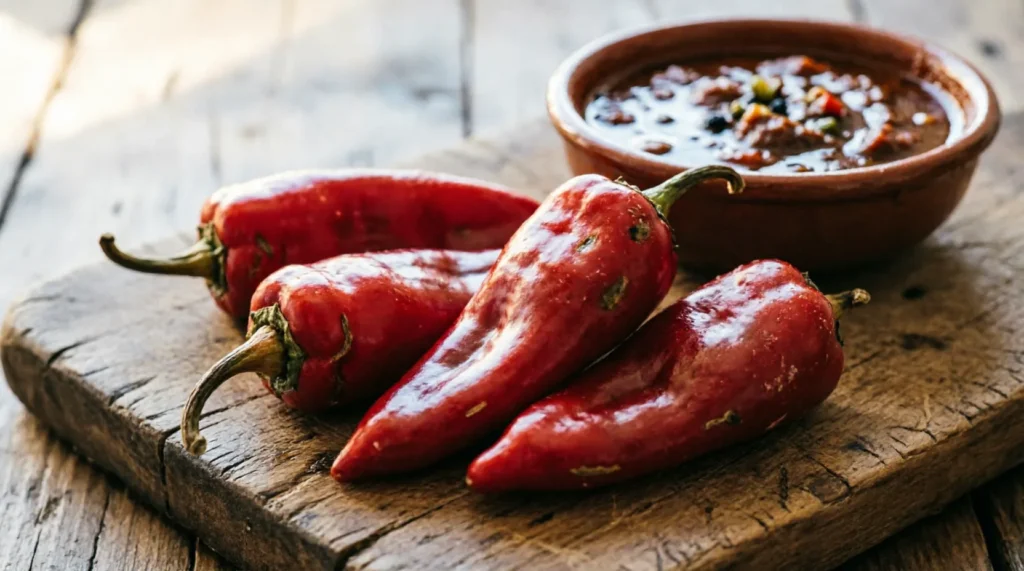
Quick answer: Use chili (one L) when referring to the spicy stew or the American English spelling of the pepper. Use chilli (two Ls) when writing in British English about the hot pepper itself.
I see this exact spelling mix-up constantly when editing food blogs, restaurant menus, and international recipe submissions. The confusion stems from regional English differences and the dual meaning of the word as both a pepper and a stew. Getting the chili or chilli spelling right depends entirely on your target audience and what exactly you are cooking.
| Term | Meaning / When to use | Example sentence |
|---|---|---|
| Chili | The spicy meat and bean stew (US/Global); the pepper in American English. | I made a big pot of beef chili for the game. |
| Chilli | The hot pepper in British, Australian, and Indian English. | Add some fresh chopped chilli to the curry. |
When to use chili
You should use the one-L spelling, chili, when you are writing for an American audience or referring to the famous Texan stew. In North American English, “chili” is the universally accepted spelling for both the Capsicum pepper and the hearty dish made from meat, beans, and spices.
If you are following major American style guides like the Associated Press (AP) or the Chicago Manual of Style, “chili” is your default choice. The AP Stylebook specifically notes that “chili” is the preferred spelling for the stew, and it is widely accepted for the pepper in US publications. Even if you are writing about a raw jalapeño or a dried ancho pepper, an American editor will expect you to use the one-L spelling.
Here are two real-world examples of how this error appears in professional writing and how to fix it.
Text message error and fix:
- Error: “Heading home now. I left some chilli in the fridge, just microwave it for dinner.”
- Fix: “Heading home now. I left some chili in the fridge, just microwave it for dinner.”
- Context: In North America, the stew is always spelled with one L. Using two Ls for the stew in a US context looks like a typo to the reader.
Email error and fix:
- Error: “Hi team, please review the draft for the new chilli recipe blog post before we publish it on Tuesday.”
- Fix: “Hi team, please review the draft for the new chili recipe blog post before we publish it on Tuesday.”
- Context: An American food blog targeting US readers must use the one-L spelling for the pepper and the dish to maintain local credibility and proper SEO alignment.
When you are writing about Cincinnati chili, Texas chili, or a standard bowl of American chili con carne, stick strictly to the single L. It signals to your reader that you understand the regional culinary terminology.
When to use chilli
You must use the two-L spelling, chilli, when you are writing for a British, Australian, Indian, or South African audience. In these regions, “chilli” refers exclusively to the hot pepper itself.
According to Chilli, the double-L spelling is the standard in the UK and many Commonwealth nations to denote the fiery Capsicum fruit. If you are writing a recipe for a Thai green curry, an Indian vindaloo, or a British-style curry house menu, you need to use the two-L spelling to match the local dialect.
British and Australian style guides, including the Oxford Style Guide, strictly enforce “chilli” for the pepper. If you use the one-L spelling in a London-based publication, it will immediately flag as an Americanism.
Here is a concrete example of how this error appears on a resume and how to fix it.
Resume line error and fix:
- Error: “Created a proprietary chili oil recipe that became the restaurant’s best-selling takeout item.”
- Fix: “Created a proprietary chilli oil recipe that became the restaurant’s best-selling takeout item.”
- Context: If you are applying for a culinary role in London, Sydney, or Mumbai, you must use the two-L spelling for the pepper to show local market awareness and attention to detail.
Notice that in British English, the stew itself is also spelled with two Ls (e.g., “chilli con carne”). However, when isolating the word to mean just the raw or dried pepper, “chilli” is the only correct spelling in these regions. Always check the geographic location of your publisher or your target demographic before finalizing your draft.
How to remember the difference
Memory tricks are highly effective for keeping regional spelling variations straight. I use a few specific mnemonics with the junior editors I train to ensure they never mix these up again.
The “Lone Star” vs. “London and Lahore” Trick Think about the geography. Chili with one L stands for the Lone Star State (Texas, USA), which is the spiritual home of the American stew. Chilli with two Ls stands for London and Lahore (representing British and Indian/Commonwealth English), where the two-L spelling is the law of the land.
The “One Pot” vs. “Twice as Hot” Trick Think about the physical properties of the items. A bowl of chili is a single, unified dish cooked in one pot, so it gets one L. The chilli pepper is incredibly spicy and burns your tongue twice as long as a mild pepper, so it gets two Ls.
The Visual Length Trick Look at the words themselves. The word chilli is longer than chili. The pepper is small, but its heat is massive and expansive, requiring an extra letter. The stew is a heavy, dense, singular object, represented by the shorter, more compact word.
Pick the mnemonic that sticks best in your brain, and apply it every time you draft a recipe, menu, or food article.
Common mistakes and exceptions
Even with a clear rule, writers frequently stumble over edge cases, pluralization, and the influence of Spanish on American English.
Regional Spelling variations often dictate which version of a word is considered correct in a specific publication, making audience awareness crucial for writers. Here are the most common traps you need to avoid.
The “Chile” Exception in the American Southwest In New Mexico and parts of Texas, you will frequently see the word spelled chile (pronounced CHEE-lay). This is the original Spanish spelling. In the American Southwest, “chile” is used to refer to the pepper itself, particularly the green or red Hatch chiles, and the sauce made from them. If you are writing specifically about New Mexican cuisine, use “chile” for the pepper and “chili” for the stew. Do not mix them up; a “bowl of chile” in New Mexico refers to the sauce, not the meat stew.
Pluralization Rules Getting the plural right is just as important as the singular.
- In American English, the plural of chili is chilies (e.g., “a basket of red chilies”).
- In British/Commonwealth English, the plural of chilli is chillies (e.g., “a basket of red chillies”).
- If you are using the Spanish “chile,” the plural is chiles (e.g., “roasted green chiles”).
The UK Stew Spelling As mentioned earlier, while the US spells the stew as “chili,” the UK spells it as “chilli con carne.” If you are editing a British cookbook, do not change “chilli con carne” to “chili con carne.” The British apply the two-L spelling to the stew because they are borrowing the word from the pepper.
Compound Nouns Be careful with compound nouns. In the US, you buy “chili powder” (which is actually a blend of spices) and “chili flakes” (crushed dried peppers). In the UK, you buy “chilli powder” (pure ground pepper) and “chilli flakes.” The spelling of the modifier always changes based on the regional rule for the pepper.
Frequently Asked Questions
Is chilli con carne spelled with one L or two? In British English, it is spelled “chilli con carne” with two Ls, while American English prefers “chili con carne” with one L. The spelling depends entirely on the regional dialect of your target audience.
What is the difference between chili and chile? “Chile” is the Spanish spelling and is used primarily in the American Southwest to refer to the pepper or the green sauce, whereas “chili” is the anglicized version used for the pepper and the stew in standard American English.
Do I need to change my spelling for an international audience? Yes, if you are writing for a UK or Australian audience, use “chilli” for the pepper to maintain local credibility, but stick to “chili” if your primary readers are in North America. Adapting your spelling prevents your content from looking like it was carelessly copied from a foreign website.
Can I use chili and chilli interchangeably in the same article? No, you should never mix the two spellings in a single piece of content. Doing so creates a jarring reading experience and signals to the reader that the text was not properly proofread or localized for a specific region.

Kevin Sanchez holds a Master’s degree in English Linguistics from the University of California, where he cultivated a deep appreciation for the intricacies of language. With over 10 years of experience in the field, Kevin specializes in the nuances of English spelling, particularly the evolution of spelling conventions over time. His fascination with how English words have transformed through cultural and technological influences led him to become a prominent voice at SpellRightDaily. Kevin produces content focused on historical spelling variations and their contemporary implications, offering readers insightful comparisons of British and American English. Beyond this, Kevin has a keen interest in educating readers about the rules that govern standard spelling and the exceptions that often lead to confusion. His articles frequently feature tips for mastering complex spelling patterns and understanding the etymology of perplexing words. Kevin’s dedication to clarity and accessibility makes his contributions invaluable to both casual readers and English language professionals.