

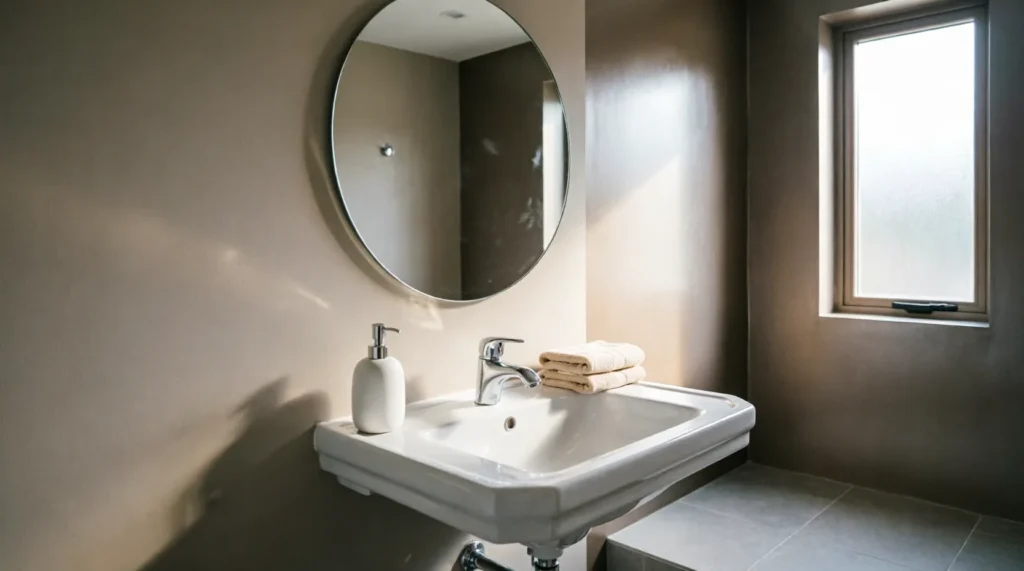
Quick answer: Use satin paint for bathroom walls and ceilings. It offers superior moisture resistance, durability, and cleanability compared to eggshell, making it the practical choice for high-humidity environments where mildew and frequent cleaning are concerns.
Choosing between eggshell and satin paint finishes can feel like splitting hairs, especially when standing in the paint aisle with a dozen swatches in hand. Both sheens sit in the middle of the gloss spectrum, offering more luster than flat matte but less shine than semi-gloss. However, the distinction becomes critical when applied to a bathroom, a room defined by extreme humidity, temperature fluctuations, and frequent exposure to water and cleaning agents. While eggshell provides a sophisticated, low-luster look ideal for living rooms, its porous nature makes it vulnerable in wet areas. Satin, with its tighter molecular structure and higher resin content, stands up to steam and scrubbing without compromising on aesthetic appeal.
| Term | Meaning / When to use | Example sentence |
|---|---|---|
| Eggshell | A low-luster finish (10-25% gloss) that mimics the subtle sheen of an egg. Best for low-traffic, dry areas like bedrooms and dining rooms where wall imperfections need hiding. | “We chose an eggshell finish for the master bedroom to create a cozy, non-reflective atmosphere that hides minor drywall flaws.” |
| Satin | A medium-luster finish (25-35% gloss) with a velvety appearance. Ideal for high-traffic or high-moisture areas like bathrooms, kitchens, and hallways due to its durability and ease of cleaning. | “For the kids’ bathroom, we used satin paint because it resists mildew and can be wiped down easily after messy bath times.” |
When to use eggshell
Eggshell paint is named for its resemblance to the surface of an eggshell, offering a soft, velvety appearance with very little reflection. This finish typically contains less resin and more pigment than satin, which results in a flatter appearance that diffuses light beautifully. I recommend eggshell exclusively for dry, low-traffic interior spaces where the primary goal is aesthetic warmth rather than durability.
In a standard powder room or half-bath that sees minimal shower use, eggshell might technically survive, but it is rarely the best long-term investment. The lack of protective resins means that moisture can penetrate the film more easily, leading to potential peeling or mold growth behind the paint layer over time.
Use eggshell in these specific scenarios:
- Adult-only guest bathrooms that are used infrequently and do not contain a shower or tub.
- Bathroom ceilings in well-ventilated spaces, provided the walls are painted in a more durable sheen. Note that even here, many professionals prefer satin or matte specifically formulated for bathrooms.
- Decorative accent walls in large, open-concept bathrooms where the wall is far from the shower spray zone and serves primarily as a visual backdrop.
Consider this real-world example from a recent renovation project: A homeowner insisted on using eggshell in their main family bathroom to match the living room adjacent to it. Within six months, the area around the towel rack began to show signs of wear, and the high humidity caused the paint to lose its adhesion near the ceiling. We had to strip and repaint the entire room with satin, costing double the initial effort.
When to use satin
Satin is the workhorse of interior paint finishes, striking a perfect balance between aesthetics and performance. It contains a higher ratio of resins to pigments, creating a tighter, more impermeable film on the wall surface. This composition allows satin to repel water droplets rather than absorbing them, which is crucial for preventing the structural damage and health hazards associated with bathroom mold.
I advise clients to use satin for virtually all bathroom surfaces, including walls, ceilings, and trim. Its slight glow helps brighten smaller, windowless bathrooms by reflecting artificial light, while its durability ensures that soap scum, toothpaste splatters, and hard water stains can be removed with a simple wipe of a damp cloth.
Use satin in these specific scenarios:
- Full bathrooms with showers or tubs where steam accumulation is daily occurrence.
- High-touch areas such as around light switches, door frames, and vanity backsplashes where hands and cleaning products frequently make contact.
- Homes with poor ventilation where exhaust fans are weak or windows are rarely opened, necessitating a paint film that can withstand prolonged humidity exposure.
Here is a practical example from a client consultation: A family with three young children needed a bathroom solution that could withstand daily baths and frequent cleaning. They initially considered eggshell for its “softer” look. I guided them toward satin, explaining that the ability to scrub away crayon marks and soap residue without burning through the paint layer was worth the slight increase in sheen. Five years later, the walls still looked fresh, requiring only occasional wiping rather than repainting.
How to remember the difference
The easiest way to distinguish between these two finishes is to think about their names and what they represent in nature. An eggshell is fragile, porous, and easily stained—think of how quickly a raw egg absorbs odors or colors if left unsealed. Satin, on the other hand, refers to a smooth, tightly woven fabric that sheds dirt and resists wear.
Use this mnemonic: “Satin Sheds, Eggshell Absorbs.”
In a bathroom, you want a finish that sheds water and dirt, not one that absorbs moisture and stains. If you can imagine wiping the wall with a wet sponge, choose satin. If you are simply looking at the wall from across the room in a dry environment, eggshell may suffice. Another helpful trick is to check the paint can label for the gloss percentage. If it is below 25%, it is likely eggshell and too risky for a shower area. If it is between 25% and 35%, it is satin and ready for humidity.
Common mistakes and exceptions
One of the most common mistakes homeowners make is assuming that “bathroom paint” is a magical category that overrides sheen rules. While some manufacturers offer specialized formulations with added mildewcides, the physical properties of the sheen still apply. An eggshell finish, even with mildew resistance, will still trap moisture against the drywall if the ventilation fails.
Another frequent error is using high-gloss or semi-gloss on large bathroom walls. While these finishes are incredibly durable, they highlight every imperfection in the drywall, from tape seams to uneven plaster. In older homes with imperfect walls, semi-gloss can look cheap and industrial. Satin provides enough protection without acting as a mirror for your wall’s flaws.
There is also a regional difference in terminology to watch for. In some European markets, the term “satin” may refer to a different gloss level than in North America. Always check the technical data sheet for the specific gloss percentage rather than relying solely on the name. Additionally, some premium paint lines offer “eggshell enamel” or “scrubbable eggshell,” which bridges the gap. However, for a standard bathroom, true satin remains the safest, most proven choice.
A notable exception is the use of specialty waterproof paints for shower enclosures. If you are painting inside a tiled shower area (which is generally not recommended unless using specific epoxy systems), standard satin latex will fail. In those rare cases, you must use a dedicated epoxy or urethane-based system, regardless of the sheen name.
Frequently Asked Questions
Can I use eggshell paint in a half-bath without a shower? Yes, you can use eggshell in a powder room or half-bath that lacks a shower or tub, as humidity levels remain low. However, satin is still recommended for easier cleaning of hand-washing splashes and general durability.
Does satin paint show more brush strokes than eggshell? Satin can reveal application marks more than eggshell due to its higher sheen, but this is easily mitigated by using a high-quality synthetic brush or roller and maintaining a wet edge during application. Proper prep and technique result in a smooth, professional finish.
Is satin paint difficult to touch up? Touching up satin can be tricky because the sheen may not blend perfectly with the surrounding aged paint. It is best to keep leftover paint for future repairs and feather the edges carefully, or consider repainting the entire wall section for a seamless look.
How often should I repaint bathroom walls with satin finish? With proper ventilation and regular cleaning, satin paint in a bathroom can last 5-7 years before needing a refresh. If you notice persistent mildew spots that cannot be cleaned or peeling near the ceiling, it may be time to repaint sooner.

Kevin Sanchez holds a Master’s degree in English Linguistics from the University of California, where he cultivated a deep appreciation for the intricacies of language. With over 10 years of experience in the field, Kevin specializes in the nuances of English spelling, particularly the evolution of spelling conventions over time. His fascination with how English words have transformed through cultural and technological influences led him to become a prominent voice at SpellRightDaily. Kevin produces content focused on historical spelling variations and their contemporary implications, offering readers insightful comparisons of British and American English. Beyond this, Kevin has a keen interest in educating readers about the rules that govern standard spelling and the exceptions that often lead to confusion. His articles frequently feature tips for mastering complex spelling patterns and understanding the etymology of perplexing words. Kevin’s dedication to clarity and accessibility makes his contributions invaluable to both casual readers and English language professionals.