

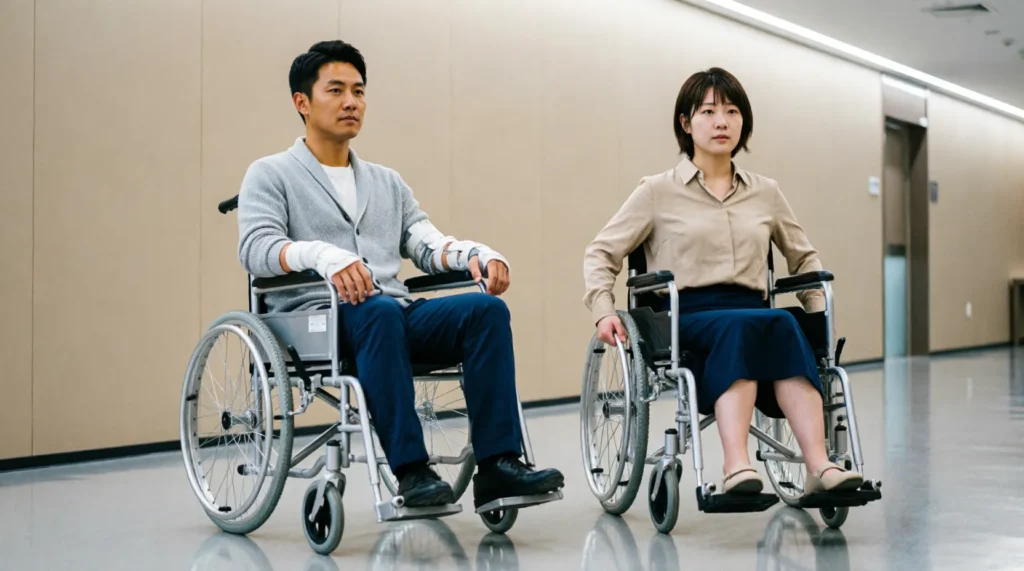
Quick answer: The primary difference between quadriplegic and paraplegic is the extent of paralysis. Quadriplegia (also known as tetraplegia) involves paralysis affecting all four limbs and typically the torso, resulting from injury to the cervical spinal cord. Paraplegia involves paralysis affecting only the lower half of the body, including both legs, resulting from injury to the thoracic, lumbar, or sacral regions of the spinal cord.
These two terms are frequently confused in casual conversation, media reporting, and even some medical documentation because they both describe forms of paralysis caused by spinal cord injuries. However, they represent distinct clinical conditions with different implications for mobility, independence, and daily care. Understanding the precise distinction is crucial for accurate communication, proper medical coding, and respectful discourse regarding disability.
| Term | Meaning / When to use | Example sentence |
|---|---|---|
| Quadriplegic | Describes a person with paralysis in all four limbs and often the torso, due to cervical spinal cord injury. | “After the cervical fracture, he became quadriplegic and requires assistance with most daily activities.” |
| Paraplegic | Describes a person with paralysis in the lower half of the body (both legs), due to thoracic, lumbar, or sacral spinal cord injury. | “She is paraplegic following a thoracic spine injury but retains full use of her arms and hands.” |
When to Use Quadriplegic
Use the term quadriplegic when referring to an individual who has lost motor and/or sensory function in all four extremities (arms and legs) and usually the trunk. This condition is almost always the result of damage to the cervical region of the spinal cord (the neck area, specifically vertebrae C1 through C8).
The severity of quadriplegia can vary significantly depending on the exact level of the injury. A higher cervical injury (such as C1-C3) may result in total dependence on ventilators for breathing and complete inability to move any limbs. A lower cervical injury (such as C6-C8) might allow for some shoulder, elbow, or wrist movement, enabling greater independence with adaptive equipment.
According to Wikipedia, the term “tetraplegia” is often preferred in medical contexts internationally, as “quadriplegic” derives from Latin roots while “tetraplegic” derives from Greek, but both refer to the same condition. In everyday American English, however, “quadriplegic” remains the more commonly recognized term.
Examples of correct usage:
- “The accident resulted in a C4 spinal cord injury, leaving him quadriplegic and requiring 24-hour care.”
- “As a quadriplegic athlete, she uses a specialized power wheelchair controlled by head movements.”
- “His quadriplegia affects his ability to regulate body temperature, so climate control is essential.”
When to Use Paraplegic
Use the term paraplegic when referring to an individual who has lost motor and/or sensory function in the lower half of their body, specifically both legs. The upper body, including the arms, hands, and torso, remains functional. This condition results from damage to the thoracic (mid-back), lumbar (lower back), or sacral (pelvic) regions of the spinal cord.
Because arm and hand function is preserved, paraplegic individuals often have a higher degree of independence compared to those with quadriplegia. They can typically self-propel manual wheelchairs, perform transfers independently, and manage many activities of daily living without assistance. However, they still face significant challenges related to mobility, bladder and bowel control, and potential complications like pressure sores.
Examples of correct usage:
- “After the fall from the ladder, he was diagnosed as paraplegic with no sensation below his waist.”
- “She is a paraplegic marathoner who competes using a racing wheelchair.”
- “His paraplegia means he needs accessible housing with roll-in showers and wide doorways.”
How to Remember the Difference
Remembering which term applies to which condition can be tricky, especially under pressure. Here are three reliable memory tricks I use when editing medical documents or coaching writers:
- The “Para” Prefix: Think of “parachute.” A parachute deploys from the bottom half of a plane or skydiver. Similarly, paraplegia affects the bottom half of the body. Alternatively, remember that “para” means “beside” or “half,” hinting at partial body involvement.
- The “Quad” Number: “Quad” means four, like a quadruplet or a quadrilateral. Quadriplegia affects four limbs (both arms and both legs). If all four limbs are involved, it’s quadriplegia.
- Spinal Region Mnemonic: Visualize the spine. The neck (cervical) is high up; injury there knocks out everything below, including arms. The mid-to-lower back (thoracic/lumbar) is lower; injury there spares the arms. Cervical = Quadriplegia (both start with hard consonant sounds if you stretch it, but better: Cervical is near the head, affecting all four). Thoracic/Lumbar = Paraplegia.
A simpler editor’s trick: If the person can use their hands to type, push a wheelchair, or hold a cup, they are likely paraplegic. If they cannot use their hands or arms, they are likely quadriplegic.
Common Mistakes and Exceptions
Even well-meaning writers and speakers often stumble when discussing spinal cord injuries. Here are the most frequent errors I encounter and how to avoid them. For more, see Difference.
Mistake 1: Using “Paraplegic” for Any Wheelchair User
Not everyone who uses a wheelchair is paraplegic. Individuals with quadriplegia also use wheelchairs, often power-assisted ones. Assuming someone is paraplegic because they are in a wheelchair ignores the significant portion of the wheelchair-using community with quadriplegia. Always verify the specific condition if relevant to the context, or use neutral language like “wheelchair user” if the specific diagnosis is not pertinent.
Mistake 2: Confusing Hemiplegia with Paraplegia
Hemiplegia refers to paralysis affecting one side of the body (e.g., left arm and left leg), commonly seen after a stroke. It is distinct from paraplegia, which affects both legs regardless of side. Do not use “paraplegic” to describe someone with one-sided weakness.
Mistake 3: Ignoring Terminology Preferences
While “quadriplegic” and “paraplegic” are medically accurate adjectives, many individuals within the disability community prefer person-first language (“person with quadriplegia”) or identity-first language (“disabled person”) depending on personal preference. The terms themselves are not offensive, but assuming they define the entire person is. Additionally, as noted earlier, “tetraplegia” is the preferred international medical term for quadriplegia. In global or highly technical contexts, using “tetraplegia” demonstrates greater precision and awareness of international standards.
Exception: Incomplete Injuries
It is crucial to note that not all spinal cord injuries result in complete paralysis. An “incomplete” quadriplegic or paraplegic individual may retain some sensation or limited movement below the level of injury. The terms still apply based on the primary pattern of impairment, but the functional reality can be far more nuanced. For example, someone with incomplete quadriplegia might have weak grip strength but not total loss of hand function.
Frequently Asked Questions
Can a person recover from being quadriplegic or paraplegic? Recovery depends on the severity and completeness of the spinal cord injury. While some individuals with incomplete injuries may regain partial function through rehabilitation, complete spinal cord injuries currently have no cure, though research into nerve regeneration is ongoing.
Is quadriplegia more severe than paraplegia? Generally, yes, because quadriplegia involves loss of function in all four limbs and often impacts breathing and autonomic functions, requiring more extensive care. Paraplegia preserves arm and hand function, allowing for greater independence in daily tasks.
What causes these conditions? Both conditions are primarily caused by traumatic spinal cord injuries from accidents (car crashes, falls, sports injuries) or non-traumatic causes such as tumors, infections, or degenerative diseases like ALS or multiple sclerosis affecting specific spinal regions.
Should I say “quadriplegic person” or “person with quadriplegia”? Both are acceptable, but preferences vary individually. Person-first language (“person with quadriplegia”) emphasizes humanity before disability, while some individuals prefer identity-first language. When in doubt, ask the individual or default to person-first language in formal writing.

Samantha Jones graduated with a Bachelor’s degree in English Literature from Oxford University and has been involved in language education for over 15 years. Her expertise lies in comparative language analysis, focusing particularly on the differences and similarities in spelling across various English dialects. Samantha’s passion for this niche developed from her love of storytelling and desire to preserve the subtle differences that make English unique around the globe. On SpellRightDaily, she crafts detailed articles that compare common spelling errors and offer practical advice for writers and editors looking to polish their work. Samantha’s content is known for its clarity and depth, helping readers decode complex spelling issues and improve their writing skills. She also enjoys delving into the psychology of language learning, and how cognitive factors influence the retention of correct spelling patterns. Her engaging writing encourages a deeper appreciation of the language’s rich diversity.