

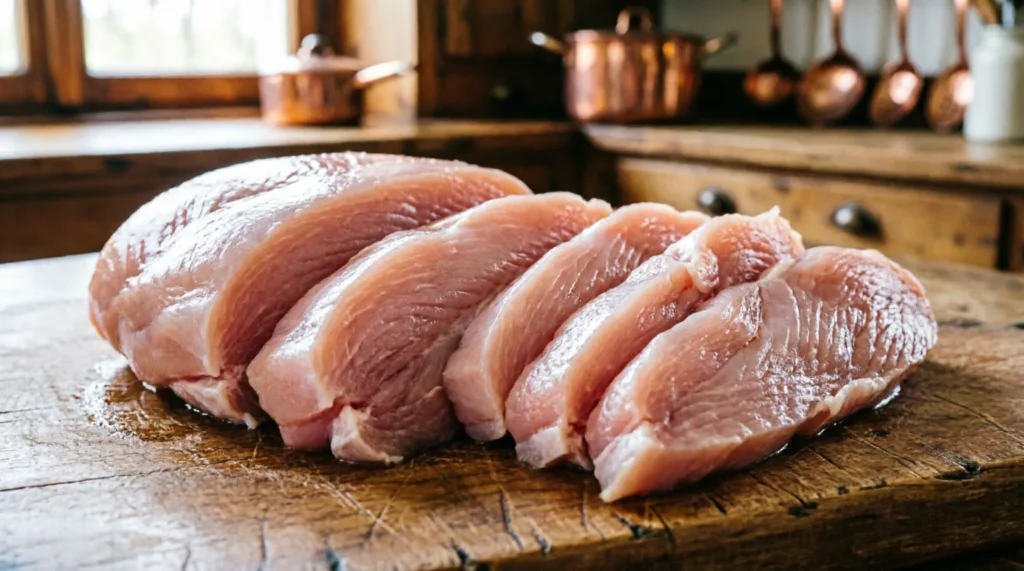
Quick answer: Always cut chicken against the grain for tender, easy-to-chew meat. Cutting with the grain leaves long muscle fibers intact, resulting in tough, stringy chicken that’s difficult to eat.
Confusion about cutting direction ruins countless chicken dinners. Home cooks slice through breasts and thighs without considering fiber direction, then wonder why the meat feels chewy despite perfect cooking temperature. Understanding the difference between cutting against or with the grain transforms tough chicken into restaurant-quality tenderness.
Quick Comparison: Against vs. With the Grain
| Term | Meaning / When to use | Example sentence |
|---|---|---|
| Against the grain | Cut perpendicular to muscle fibers; use for all cooked chicken to maximize tenderness | “After grilling the chicken breasts, I sliced them against the grain for tender bites.” |
| With the grain | Cut parallel to muscle fibers; avoid this method as it creates tough, stringy meat | “When you cut with the grain, each piece contains full-length muscle fibers that resist your teeth.” |
When to Use Against the Grain
Cutting against the grain is the gold standard for preparing cooked chicken, whether you’re working with breasts, thighs, or whole roasted birds. This technique shortens muscle fibers, making each bite easier to chew and more pleasant to eat.
According to Chicken, poultry muscle structure consists of long protein fibers bundled together. When you slice perpendicular to these fibers, you create shorter segments that separate easily when chewed.
Use against-the-grain cutting when:
- Slicing grilled or roasted chicken breasts for sandwiches or salads
- Cutting cooked chicken thighs for stir-fries or fajitas
- Carving whole roasted or smoked chicken
- Preparing chicken for meal prep containers
- Serving chicken in dishes where tenderness matters (tacos, wraps, grain bowls)
Real-world examples:
Email to a friend: “I finally figured out why my grilled chicken was so tough—I was slicing with the grain instead of against it. Game changer!”
Recipe note: “Let chicken rest 5 minutes, then slice against the grain at a 45-degree angle for maximum tenderness.”
Text message: “The secret to tender chicken stir-fry: cut raw chicken against the grain before cooking, then slice cooked chicken against the grain again.”
How to identify the grain direction:
Look at the cooked chicken surface. You’ll see lines running in one direction—these are the muscle fibers. Position your knife perpendicular (at 90 degrees) to these lines. If the fibers run left-to-right, cut top-to-bottom.
For chicken breasts, the grain typically runs lengthwise from the thick end to the thin point. For thighs, fibers often run diagonally, requiring you to adjust your cutting angle accordingly.
When to Use With the Grain
Here’s the honest truth: you should almost never cut chicken with the grain if tenderness is your goal. This method preserves full-length muscle fibers, creating meat that requires excessive chewing and feels unpleasantly tough.
However, understanding when people accidentally cut with the grain helps prevent the mistake:
Situations where cutting with the grain happens (and why it’s problematic):
- Rushed meal prep: When you’re in a hurry, you slice chicken breasts straight down the middle without checking fiber direction, creating long, stringy strips
- Lack of knowledge: Many home cooks don’t realize grain direction matters, so they cut whatever way seems easiest
- Misidentifying the grain: On certain cuts like chicken thighs, the grain direction isn’t obvious, leading to accidental parallel cuts
What happens when you cut with the grain:
I’ve edited countless cooking manuscripts where authors neglect to mention grain direction, and the results speak for themselves. Meat that’s been perfectly cooked to 165°F still tastes overcooked and dry because the fibers remain unbroken.
Example of the problem:
“Yesterday I grilled chicken breasts for tacos. They looked perfect—golden brown, juicy when I cut into them. But when my family ate them, everyone complained the chicken was tough and stringy. I had sliced with the grain, leaving 6-inch muscle fibers intact. Today, I sliced against the grain, and the same recipe produced fork-tender chicken.”
The only exception:
If you’re making chicken stock or broth and plan to shred the meat after long simmering, grain direction matters less because extended cooking breaks down fibers. But for any quick-cooking method (grilling, pan-searing, roasting) or when serving sliced chicken, always cut against the grain.
How to Remember the Difference
Use this simple mnemonic: “Against = Advantage”
Both words start with “A,” and cutting against the grain gives you an advantage in tenderness.
Visual trick:
Imagine muscle fibers as a bundle of uncooked spaghetti strands. If you bite along the length (with the grain), you’re chewing one long strand. If you bite across (against the grain), you’re biting through many short pieces. The short pieces are easier to manage.
Editor’s insight:
After years of correcting recipe manuscripts, I’ve noticed that professional chefs always mention grain direction when discussing meat preparation, while amateur recipes skip this crucial step. The difference between a home cook and a professional often comes down to these small technical details. For more, see Against.
Physical demonstration:
Take a piece of cooked chicken and try both methods:
- Cut one slice with the grain
- Cut another slice against the grain
- Chew both pieces
You’ll immediately feel the difference. The against-the-grain piece requires minimal chewing; the with-the-grain piece feels like rubber bands.
Another memory aid:
Think of wood grain. Carpenters sand against the grain for smoothness and with the grain for roughness. The same principle applies to meat—against for smooth, tender bites; with for rough, tough chewing.
Common Mistakes and Exceptions
Mistake #1: Not letting chicken rest before slicing
Cutting chicken immediately after removing it from heat causes juices to run out, creating dry meat regardless of grain direction. Always rest chicken for 5-10 minutes before slicing. This allows juices to redistribute throughout the meat.
Mistake #2: Using a dull knife
A dull knife tears rather than cuts, damaging muscle fibers and creating ragged edges. Even if you cut against the grain, a dull blade produces inferior results. Use a sharp chef’s knife or slicing knife for clean cuts.
Mistake #3: Slicing too thick
Cutting against the grain helps, but slicing chicken into 2-inch-thick chunks still creates large pieces that require significant chewing. For optimal tenderness, slice chicken into ¼ to ½-inch strips or bite-sized pieces.
Mistake #4: Confusing raw and cooked grain direction
The grain direction remains consistent before and after cooking, but it’s often easier to see on cooked chicken. If you’re unsure, check the cooked surface, then apply that knowledge when prepping raw chicken for stir-fries or fajitas.
Mistake #5: Ignoring the angle
Cutting straight down at 90 degrees works, but slicing at a 45-degree angle against the grain creates wider, more attractive pieces with even more fiber-shortening benefit. This technique is standard in professional kitchens for dishes like chicken teriyaki or fajitas.
US vs. UK terminology:
The concept remains identical across English-speaking regions, though terminology varies slightly:
- Americans say “against the grain”
- British cooks may say “across the grain”
- Both mean the same thing: perpendicular to muscle fibers
Exception: Shredded chicken
When making pulled chicken or shredded chicken for soups and salads, grain direction becomes less critical because you’re pulling the meat apart along natural fiber lines rather than cutting across them. However, starting with against-the-grain slices makes shredding easier.
Exception: Chicken wings
Wings contain small muscles with complex fiber patterns, making grain direction less relevant. Focus on cutting through joints cleanly rather than worrying about grain.
Frequently Asked Questions
Does cutting against the grain make chicken more tender?
Yes, cutting against the grain shortens muscle fibers, making chicken significantly more tender and easier to chew. This technique is essential for tougher cuts like chicken thighs and breasts that have been overcooked.
How do you find the grain on a chicken breast?
Look for parallel lines running along the surface of the chicken. On a chicken breast, these fibers typically run lengthwise from the thick end toward the pointed tip. Position your knife perpendicular to these lines before slicing.
Should you cut chicken against the grain before or after cooking?
For stir-fries and quick-cooking dishes, cut raw chicken against the grain before cooking. For grilled, roasted, or smoked chicken, let it rest after cooking, then slice against the grain before serving. Both methods improve tenderness.
What happens if you cut chicken with the grain?
Cutting chicken with the grain leaves long muscle fibers intact, resulting in tough, stringy, chewy meat that’s difficult to eat. Even perfectly cooked chicken will seem overcooked if sliced with the grain.

Kevin Sanchez holds a Master’s degree in English Linguistics from the University of California, where he cultivated a deep appreciation for the intricacies of language. With over 10 years of experience in the field, Kevin specializes in the nuances of English spelling, particularly the evolution of spelling conventions over time. His fascination with how English words have transformed through cultural and technological influences led him to become a prominent voice at SpellRightDaily. Kevin produces content focused on historical spelling variations and their contemporary implications, offering readers insightful comparisons of British and American English. Beyond this, Kevin has a keen interest in educating readers about the rules that govern standard spelling and the exceptions that often lead to confusion. His articles frequently feature tips for mastering complex spelling patterns and understanding the etymology of perplexing words. Kevin’s dedication to clarity and accessibility makes his contributions invaluable to both casual readers and English language professionals.